Case No. #1173
Periodic Anomalous Resonance and Rapid Floral Transmutation Incident in Tsingy de Bemaraha Strict Nature Reserve, Madagascar
Summary
In recent years, the Tsingy de Bemaraha Strict Nature Reserve in western Madagascar has reported periodic anomalous resonance, accompanied by the rapid transmutation of its flora. In this landscape of sharp limestone pinnacles, a profound vibrational sound is observed at specific times, causing affected plants to grow, discolor, or even crystallize at an abnormal rate. Initial investigations by authorities have failed to pinpoint the sound source or the transmutation mechanism, leaving the phenomenon unexplained. Local inhabitants have long referred to it as the "Song of Stones," and its peculiar nature has garnered significant interest among specialists.
Details
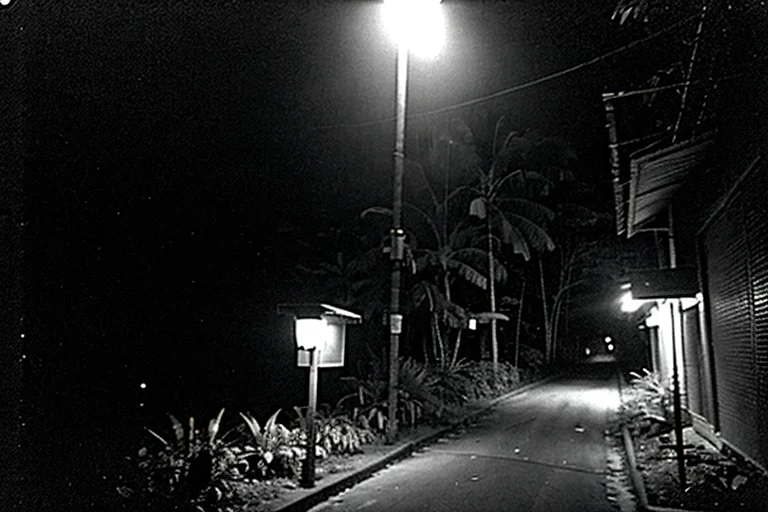
On the early morning of March 14, 2018, botanists from the National Center for Scientific Research first recorded this anomaly while exploring the Tsingy de Bemaraha Strict Nature Reserve. At 2:17 AM, they perceived a low-frequency resonance, immediately followed by the observation that nearby plants grew several times faster than normal, with some changing color from green to bluish-white. The sound lasted for several minutes before abruptly ceasing.
Since then, authorities have received multiple reports of this phenomenon. Incidents tend to concentrate during full and new moon nights, with the resonance's occurrence consistently synchronizing with plant transmutation. The sound source is constantly fluid, not fixed to a specific point. Acoustic analysis reveals a unique frequency pattern, unlike any known natural phenomenon, with energy sufficient to cause slight vibrations in the surrounding bedrock.
The initial investigation team indicated the possibility that acoustic vibrations directly affect plant cellular structures. Altered plant tissues were found to absorb and release moisture at an unusually rapid rate, and microscopic mineral crystal deposits were observed on cell walls. However, the cause of this crystallization and why only specific plant species are affected remain unclear.
Local inhabitants have historically revered this sound and plant change as "Baton's Song" or "Song of Stones," considering it a sign of the Tsingy spirits. Their legends state this "song" echoes from deep within the Tsingy, sometimes bringing fertility, other times portending anomalies. Authorities are currently scrutinizing whether these legends are mere superstition or the result of long-term observation of the phenomenon.
Multiple surveillance devices have been deployed, but upon the onset of resonance, some installed sensors invariably record anomalous high-voltage spikes, subsequently malfunctioning for several seconds. Equipment presumed to be closer to the sound source is particularly susceptible. This makes detailed data acquisition during the most critical moments difficult.
Authorities are exploring all possibilities, whether this phenomenon is due to geological activity, unknown microorganisms, or unidentified physical phenomena. To date, no known geophysical mechanisms can explain it. The vastness and geographical conditions of the reserve further complicate the investigation, but authorities remain determined to unravel the full extent of this peculiar phenomenon.
Going forward, plans include establishing a wide-area acoustic sensor network and introducing surveillance devices equipped with special electromagnetic shielding. Identifying the sound source and elucidating the plant transmutation mechanism are urgent priorities. Authorities will continue the investigation until the full scope of this peculiar incident is understood.
Timeline
- March 14, 2018, 02:17 AMBotanists from the National Center for Scientific Research record the first resonance and plant transmutation.
- May 10, 2018, 11:45 PMLocal rangers witness a similar phenomenon and report it to authorities.
- September 22, 2019, DawnDuring a surveillance camera installation attempt, the camera's electronic system temporarily freezes simultaneously with sound occurrence.
- January 15, 2020, Undetermined timeLocal residents testify that the "Song of Stones" continued for several days.
- July 3, 2022, 01:05 AMAutomatic acoustic sensors record a unique frequency pattern, but some data is missing.
Witness Testimony
Witness A (Botanist, National Center for Scientific Research)It was a deep sound, like an echo from the earth's depths. As if something massive was breathing. Then, the plants before me rapidly changed color and grew. An unbelievable sight.
Ranger B (Tsingy de Bemaraha Strict Nature Reserve)That sound is often heard on full moon nights. The elders say the stone pinnacles are singing. After that sound, certain plants grow strangely. But they are brittle to the touch, as if they become something else.
Anonymous (Local Resident)When the song of the stones echoes, something changes. Sometimes good, sometimes bad. That sound has been with the Tsingy long before we were born. It's part of nature. But recently, the sound feels louder.
Kyu's Analysis
Unexplainable by known scientific laws. This phenomenon synchronizes with environmental transmutation and resists specific physical intervention. Continued record.