Case No. #1062
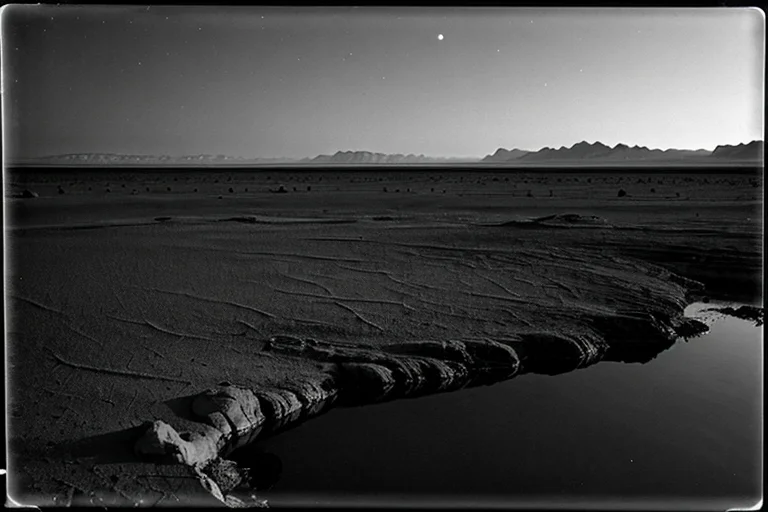
Kyzylkum Desert, The Silent Song
Summary
Since May 12, 2018, reports of an unexplained "singing voice" have emerged from specific locations in the central Kyzylkum Desert, Uzbekistan. This sound, indistinguishable from a human voice or musical instrument, possesses a distinct melody yet lacks any identifiable physical source. Attempts to record it using acoustic devices result in complete data loss for the relevant sections or replacement by irregular noise. No living beings or clear sound sources exist in the vicinity. Authorities are currently focusing their investigation on the areas where these incidents occur.
Details
At 19:43 on May 12, 2018, a geological survey team deep within Uzbekistan's Kyzylkum Desert heard an unfamiliar sound. It was a continuous, melodic "singing voice," distinctly different from the desert wind. Team members initially assumed it was the song of nomads, but there were no signs of people or even animals in the vicinity. The sound persisted for several minutes before abruptly ceasing.
The first official report to authorities came from a group of travelers traversing the desert. They reported hearing a similar "singing voice" around 01:15 on March 3, 2019. Their mobile devices contained what appeared to be a recording of the sound, but upon playback, the corresponding section was either silent or replaced by intense digital noise. Following this report, authorities immediately dispatched a specialized team.
Starting in May 2019, the investigation team deployed multiple high-sensitivity microphones and wide-range acoustic measurement devices to begin regular monitoring. It became apparent that the "singing voice" was heard more frequently on moonless nights and under specific humidity conditions. However, the sound consistently caused malfunctions in recording equipment. Even professional recording devices suffered data corruption or blank sections when attempting to capture the sound source.
Physical sound source exploration was also conducted. All available technologies, including ground-penetrating radar, aerial thermal imaging, and sonar, were employed, yet no unusual geothermal activity, unknown cavities, or peculiar electromagnetic emission sources were detected. Extensive searches across the vast desert revealed no artificial structures or natural formations linked to the singing voice.
Local nomads have long held a tradition of "the silent song" existing in this desert. They say it appears in certain seasons and deeply enthralls those who hear it. However, they also state that "the song must never be recorded." This tradition bears a strange correlation with the phenomenon of lost recording data. Authorities are considering the possibility that this tradition is not merely a superstition.
Our records contain a total of 14 reports of the "singing voice" being heard, accompanied by 22 instances of recording data anomalies. None of these incidents have led to the identification of a physical sound source or its generating mechanism. This phenomenon transcends our current understanding. Authorities continue their investigation into this extraordinary matter.
Timeline
- May 12, 2018, 19:43Geological survey team hears the first "singing voice."
- March 3, 2019, 01:15Traveler group hears "singing voice"; recording attempt results in data corruption.
- Early May 2019Authorities deploy acoustic monitoring equipment for regular surveillance.
- August 22, 2020, 03:00Professional recording equipment also confirms data loss.
- PresentMultiple confirmations of the "singing voice" and continued recording anomalies.
Witness Testimony
Geological Survey Team LeaderIt was a melody clearly unlike the wind, resembling a human voice. But there was no one around. The silence was chilling.
Traveler AThat sound, once you hear it, you can never forget. I checked my phone where I'd recorded it, and there was nothing there. Unbelievable.
Nomadic ElderThat is the song of the desert spirits. Do not try to record it. Silence is its truth.
Kyuu's Analysis
A physical sound wave that refuses to be recorded. Existing science offers no explanation. Continuous monitoring is essential.