
Case No. #1701
Madagascar, Tsingy de Bemaraha: "Rock-Skinned Colossal Shadow, Resonating Anomalous Sounds, and Moving Rocks" Unidentified Terrestrial Organism Incident
Summary
In September 2023, during a patrol of Madagascar's Tsingy de Bemaraha Strict Nature Reserve, a massive rock-mimicking creature with hardened skin was sighted. Emitting low growls and strange noises at night, and moving as if crawling across rock formations, this creature's appearance strongly resembled the legendary "Faditra" of local folklore. Authorities installed automatic cameras and acoustic sensors to investigate, but the acquired data was riddled with noise, and the equipment was subsequently physically destroyed. Unprecedented organic traces were detected at the site, yet the identity of the entity remains unknown.
Details
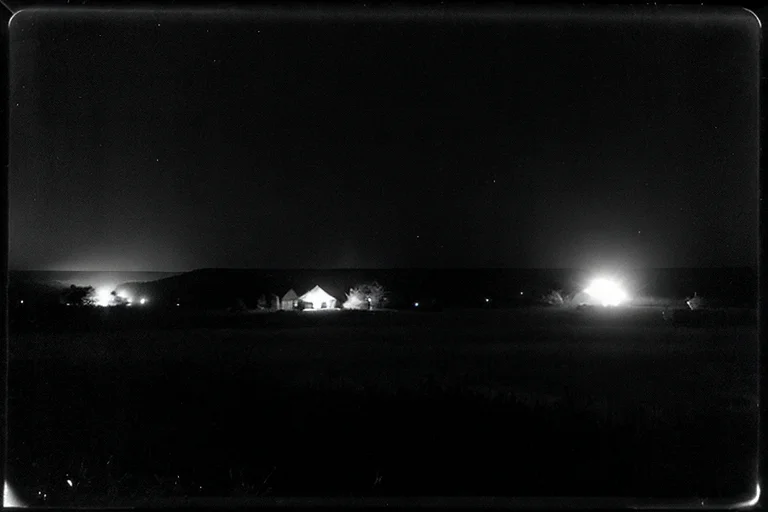
At 23:47 on September 15, 2023, a park ranger on patrol in the Tsingy de Bemaraha Strict Nature Reserve in western Madagascar reported hearing unusual low growls and echoing noises from the sharp limestone pinnacles known as 'Tsingy.' When the ranger directed a flashlight, a colossal shadow, indistinguishable from the rock formations, appeared to be moving slowly. The ranger testified that this shadow had a hardened texture, blending seamlessly with the surrounding rocks.
Similar sighting reports had been intermittently filed with the park authorities over the past few years. Local residents have long spoken of a legendary creature called "Faditra," said to appear at night, possessing hardened skin and the ability to camouflage itself as rock. Particularly in the remote areas of the reserve, former logging workers have reported experiences of "moving rocks" and inexplicable animal roars.
In response, authorities installed automatic cameras, high-sensitivity acoustic sensors, and specialized sensors for detecting localized ground vibrations in several remote locations within the Tsingy starting in March 2024. At 01:22 on April 10 of the same year, one of the cameras activated, capturing a massive heat signature via infrared. However, the footage was heavily obscured by noise, making it impossible to clearly discern its shape. Acoustic data was contaminated with a wide range of noise, from high to low frequencies, making it difficult to extract specific biological patterns.
However, high-precision vibration sensors recorded localized anomalous vibrations within approximately a 50-meter radius during the timeframe the camera detected the heat source. This indicated intermittent yet powerful pressure fluctuations, distinct from normal animal movements or minor seismic activity. Furthermore, the following day, the camera that had captured the heat source was discovered to be physically destroyed, as if it had been violently struck against the surrounding rock. The damage showed signs of intense pressure rather than sharp cuts.
From the vicinity of the destroyed camera, minute traces of unique organic material, previously unrecorded on Earth, were detected. This organic matter exhibited a composition distinct from known biological substances, making DNA analysis extremely challenging. Authorities are intensifying monitoring efforts to identify this unknown entity, but decisive evidence has yet to be obtained.
This incident suggests that the unique geographical conditions and isolated ecosystem of Tsingy de Bemaraha may harbor undiscovered organisms, perhaps even those previously thought to exist only in folklore. The authorities continue to aim for elucidation of its behavior and characteristics. This is not merely a sighting case; it signifies the expansion of an unexplored domain in global biology.
Timeline
- September 15, 2023, 23:47A park ranger on patrol in Tsingy de Bemaraha Strict Nature Reserve witnessed low growls and a massive shadow in the rocky terrain.
- Early March 2024Authorities installed automatic cameras, acoustic sensors, and vibration sensors in remote areas, commencing a full-scale investigation based on sighting reports.
- April 10, 2024, 01:22An automatic camera captured a massive heat signature via infrared, though the footage was noisy and indistinct. Acoustic and vibration sensors also recorded anomalous data.
- Early Morning, April 11, 2024The camera that captured the heat source was discovered to be physically destroyed. Signs of pressure damage and traces of unidentified organic matter were found around it.
- Late April 2024DNA analysis of the detected organic matter began but proved difficult as it did not match any known biological sequences.
Witness Testimony
Park Ranger AThe strange sound that night, it still haunts me. When I shone my light, it looked like the rock itself, a massive mass, was slowly moving. It wasn't just a rock.
Local Elder BThe Faditra lives in the Tsingy at night. It has rock skin and hunts in the shadows. That's what has been passed down for generations. If outsiders enter carelessly, they will never return.
Kyu's Analysis
The structure of this organic material differs from any known organism on Earth. The isolated ecosystem of Tsingy likely fostered a creature that underwent unique evolution. Recording continues.