Case No. #1573
Lake Kivu Area: "Pulsating Rocks" Material Hardness Anomaly Incident
Summary
Since September 2017, residents along the shores of Lake Kivu in Central Africa have consistently reported a phenomenon where rocks periodically pulsate and temporarily lose their hardness. During specific periods, the affected rocks exhibit subtle vibrations as if alive, becoming soft and malleable to the touch, similar to clay. This anomalous material transformation, though vaguely recorded in ancient local legends, remains entirely unexplained by modern science. Authorities continue remote monitoring and sampling investigations to determine the cause, but no progress has been made. This unsolved geological anomaly is designated as the "Pulsating Rocks" Material Hardness Anomaly Incident.
Details
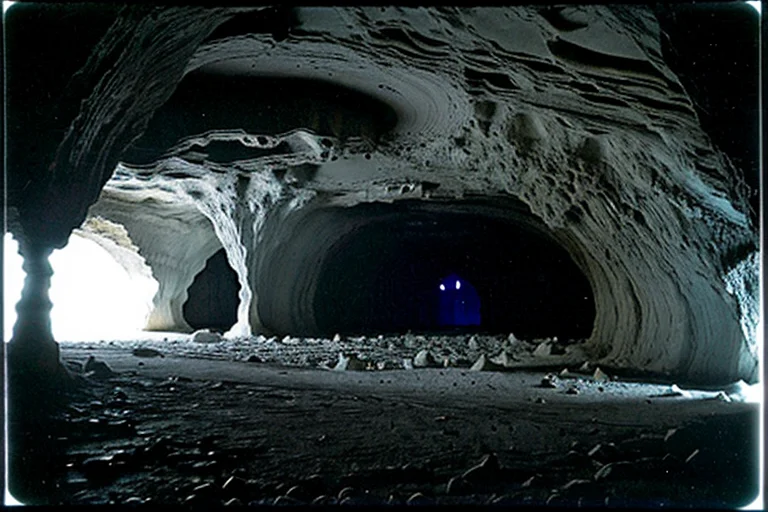
On September 12, 2017, at approximately 3:14 AM, residents in the Kalehe district on the southern shore of Lake Kivu, located on the border between the Democratic Republic of the Congo and Rwanda, witnessed a large basalt rock on the lakeshore slowly undulating up and down. Multiple witnesses confirmed that when touched, the ordinarily hard rock exhibited a flexible texture, akin to clay or rubber. This anomalous phenomenon has since been observed irregularly and periodically, sometimes accompanied by reports of faint light pulsations on the rock's surface. Local communities recognize this as a phenomenon remarkably similar to the ancient legend of the "Heartbeat of the Earth."
An official investigation team arrived on-site in March 2018 and initiated multi-faceted observations, including geological surveys, acoustic measurements, and electromagnetic wave measurements. The rocks in question primarily consisted of basalt and some sedimentary rocks, showing no significant differences from normal compositions. However, samples collected during the pulsating phenomenon revealed atypical microstructures under an electron microscope, but it was impossible to reproduce these in a laboratory or quantitatively demonstrate a hardness difference compared to normal rocks. No correlation has been found with gas emissions from the lakebed or known tectonic activities.
During the investigation, unexplainable incidents frequently occurred. During peak periods of pulsation intensity, high-precision geological measurement devices and acoustic recording equipment often malfunctioned or experienced complete data loss. Furthermore, remote surveillance cameras installed on-site repeatedly lost video signals during the pulsating events. These technical failures likely stem from a specific physical phenomenon, but the exact cause remains unidentified. The timing of data loss showed a high correlation with periods of active pulsation.
Several local legends exist concerning similar pulsating phenomena and "phantom rocks" that are said to temporarily become permeable. While these are mostly oral traditions with few concrete records, their periodic nature and unique characteristics often align with the current incident. Authorities do not dismiss the possibility that these legends are based on recurring anomalous events from the past. However, the content of these legends is not suitable for scientific verification and is treated as supplementary information only.
Currently, authorities have augmented their efforts by installing high-sensitivity sensors and fault-tolerant recording devices at multiple locations around Lake Kivu, attempting to collect comprehensive data on the phenomenon. However, the trigger, energy source, and mechanism by which the rock pulsation and hardness anomaly affect material properties remain unknown. Much data remains unrecovered, preventing complete analysis. The agency concludes that this incident represents an unknown phenomenon, challenging existing geological and physical frameworks.
Given the significance of the incident, the agency maintains continuous investigation and monitoring. Should similar phenomena be confirmed in the future, a more extensive regional investigation will be conducted. The collection and analysis of new data represent the sole path to unraveling this anomalous phenomenon.
Timeline
- September 12, 2017, circa 03:14 AMResidents along Lake Kivu's shore first report rock pulsation and softening, with multiple eyewitness accounts.
- March 15, 2018Authorities deploy an on-site investigation team, commencing intensive observations.
- July 22, 2019Frequent data loss and malfunctions in measurement equipment observed during pulsations, cause unknown.
- January 10, 2021Broad-area remote monitoring system and fault-tolerant recording devices installed, beginning continuous data collection.
Witness Testimony
Witness A (Fisherman)That rock, it moved slowly as if it were breathing. When I touched it, it was incredibly soft; my finger sank in a little. This isn't the first time, but it feels like the movement is becoming clearer each year.
Investigator B (Geologist)Samples taken during the pulsation showed microstructural changes not present in normal rocks. However, this could not be reproduced. Equipment malfunctions on-site were severe, and data for certain periods was completely unobtainable. It is inexplicable.
Kyu's Analysis
Unexplainable by known geological phenomena. Data loss during events suggests the anomaly interferes with observation. Further monitoring is essential.