Case No. #1497
The Persistent Flame of Mount Sarakura
Summary
Between autumn 2020 and spring 2021, night hikers and valley residents in Kitakyushu, Fukuoka, reported a small blue-white spherical flame near the summit of Mount Sarakura (622 m). The flame — 30–50 centimeters in diameter — moved independently of wind, disappeared when approached, and reappeared when observers retreated. Fire investigation confirmed no wildfire or campfire involvement. Geologists linked the area's disused coal mine shafts to possible methane ignition, though the scale and behavioral characteristics exceed standard "will-o'-the-wisp" descriptions.
Details
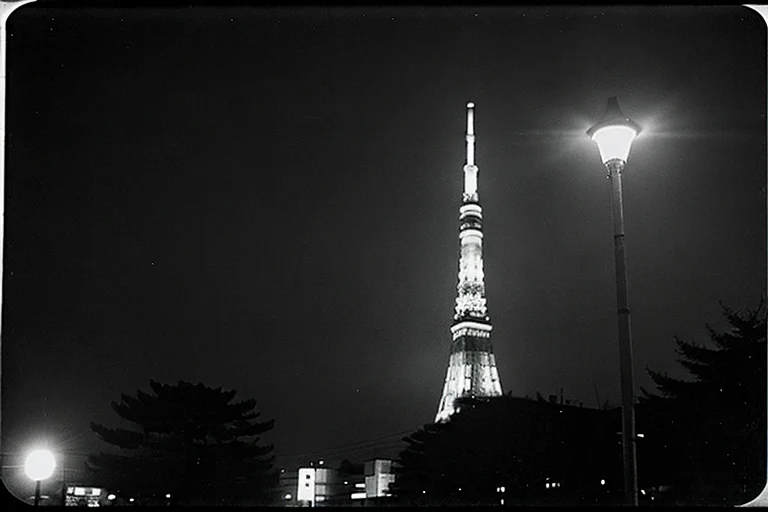
Mount Sarakura in Kitakyushu's Yahata-Higashi Ward is served by a cable car and observation deck and is known for its panoramic nighttime views. In late autumn and winter, the mountain's upper trails are largely empty after dark, with only managed lighting present.
On the night of October 15, 2020, a female hiker in her twenties descending from the summit spotted a blue-white flame flickering in roadside brush. She estimated its diameter at 30–40 centimeters. It was at or just above ground level and moved independently of the wind. As she watched, the flame seemed to drift toward her. She fled the scene and later filed a fire department report. A site inspection the following week found no evidence of burning.
In November, another hiker at the same location successfully captured roughly 30 seconds of video footage. Fire department review confirmed the image was "neither wildfire nor campfire." Between December 2020 and February 2021, four additional reports were filed from the same summit vicinity.
A geologist noted that disused coal mine shafts exist beneath the Sarakura area. Methane or hydrogen sulfide from such shafts can ignite spontaneously, producing phenomena known in Japanese tradition as *onibi* (demon fire) or *kitsunebi* (fox fire). The concentration of four sightings during the spring low-pressure frontal passage period of March–April 2021 suggests a possible correlation with conditions favoring gas ascent.
However, the geologist noted that standard *onibi* phenomena are typically a few centimeters to at most 10 centimeters in diameter. The 30–50 centimeter scale in these reports is larger. The behavioral characteristic of disappearing on approach and reappearing on retreat is also not a standard prediction of physical ignition models.
Timeline
- Oct 15, 2020 — nightFemale hiker spots a blue-white spherical flame near the summit trail. Flees when it seems to approach her.
- November 2020Second hiker videos the phenomenon for ~30 seconds. Fire department rules out wildfire/campfire.
- Dec 2020 – Feb 2021Four additional reports, all concentrated near the same summit area.
- March–April 2021 (post-frontal)Four sightings clustered after a low-pressure system. Geologist proposes correlation with disused coal mine methane.
- Summer 2021 onwardSighting frequency decreases. Seasonal correlation with mine gas conditions under consideration.
- PresentMethane sampling survey planned. Autumn observation framework prepared.
Witness Testimony
Descending hiker (female, 20s)"There was a blue-white flame in the brush. Sphere-like, moving without wind. While I stood watching, it seemed to drift toward me. I ran. It was not a dream."
Hiker who filmed the event (male, 30s)"I filmed it on my phone — about thirty seconds. Blue-white, right at ground level. Looking at the footage carefully afterward, it had moved slightly during the clip. I don't know what was producing the light."
Geologist (male, 50s)"Onibi phenomena are known in disused mine areas. Methane or hydrogen sulfide igniting spontaneously. But thirty to fifty centimeters is on the large side. The concentration after low-pressure fronts is consistent with conditions favoring gas rise."
Kyu's Analysis
Mine gas can produce flames. But 30–50 cm is too large. Disappearing on approach is not a physics prediction. Mount Sarakura's fire has not yet given an answer.