Case No. #1502
The Winter Lake-Moan of Lake Tazawa
Summary
Between 2019 and 2023, residents and researchers near Lake Tazawa in Senboku, Akita — Japan's deepest lake at 423 meters — reported a recurring low-frequency groaning sound from the lake's surface on winter nights (November to February). Acoustic instruments confirmed 20–80 Hz low-frequency sound correlated with below-freezing temperatures. The "lake-moan" (konari) natural phenomenon is documented at other Japanese deep lakes, but Tazawa's multi-directional simultaneous occurrence and human-tonal descriptions do not match existing explanations precisely.
Details
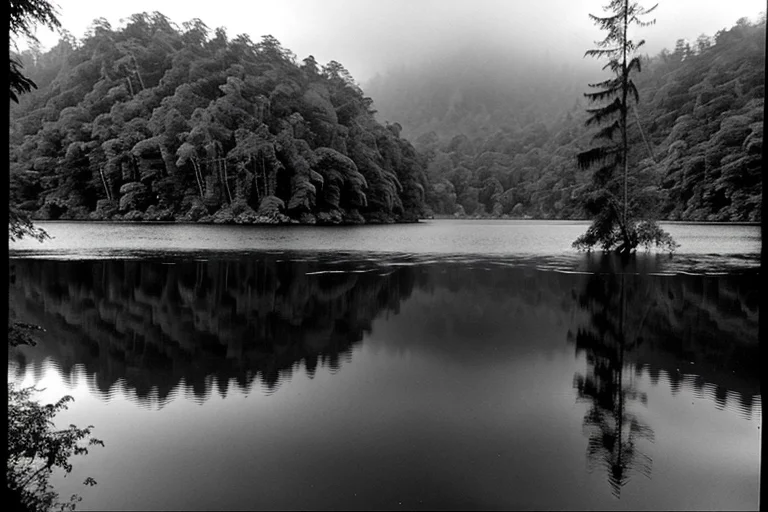
Lake Tazawa in Senboku, Akita Prefecture, is Japan's deepest lake at 423 meters, a caldera lake known for its deep blue transparency and harsh winter climate.
The first report, December 2019, came from staff at a lakeside hot spring inn. They described hearing "a low groaning sound from the direction of the lake" in the early morning hours — "not wind; something is calling." Two more similar reports from area residents followed that month.
From 2020, the Bureau placed acoustic monitoring instruments at the lakeshore. Recordings confirmed intermittent 20–80 Hz low-frequency sound from December through January, with intensity increasing on nights when temperatures dropped below −10°C. On some nights, acoustic returns from multiple separate monitoring stations recorded the sound as if originating from different directions simultaneously.
The *konari* (lake-moan) phenomenon is documented at other deep Japanese lakes (Mashu, Shikotsu) and attributed to hydrothermal activity at the lake bottom and barometric resonance effects. A specialist noted: "Lake Tazawa's depth of 423 meters is uniquely extreme in Japan. This volume may produce unique resonance characteristics. The 20–80 Hz frequency range is consistent with typical konari."
However, the simultaneous multi-directional characteristic differs from other documented lake-moan cases, which show single-source resonance. Three witnesses in the 2023 winter season independently described the sound as having "a human-tonal quality" — a characteristic not predicted by standard resonance models.
Timeline
- December 2019Onsen inn staff hear low groaning from the lake in the early morning. Two more reports from area residents same month.
- Winter 2020 onwardBureau instruments confirm 20–80 Hz low-frequency sound in December–January, correlated with below-freezing temperatures.
- Winter 2021Simultaneous multi-directional sound recorded at separate monitoring stations on certain nights.
- 2022Konari specialist analyzes data; frequency range matches; multi-directional character does not match other lake examples.
- Winter 2023Three witnesses independently describe a human-tonal quality. Noted as element not explained by standard resonance.
- PresentContinuous winter acoustic monitoring ongoing. Hydrothermal correlation survey planned.
Witness Testimony
Inn staff (female, 40s)"In the middle of the night, a sound came from outside. Low, distant, continuous. Not wind — something was calling. It came from the lake's direction. I hear it every winter."
Local resident (male, 60s)"Since childhood they said Lake Tazawa makes strange sounds in winter. Living nearby, I've gotten used to it. But it's there every year. Something large groaning at the bottom."
Acoustic researcher (male, 50s)"The frequency matches the konari range. Deep lakes have specific resonance properties. But multi-directional simultaneous emission is hard to explain with simple resonance. Tazawa is unusual."
Kyu's Analysis
Japan's deepest lake groans in winter. Simultaneously from multiple directions. What lies in 423 meters of water.