Case No. #1438
Tanzania, Ruaha National Park: Case of Anomalous Sap Exudation from Specific Trees, Accompanied by Ground Crystallization, Faint Luminescence, and Infrasonic Resonant Tones
Summary
On July 12, 2023, in the remote depths of Tanzania's Ruaha National Park, specific baobab trees were observed exuding an unusually viscous, unknown sap. Upon contact with the ground, this sap rapidly crystallized, emitting a faint, pale blue light and locally increasing ambient temperature. Concurrently, widespread infrasonic resonant tones, imperceptible to human hearing, were detected, significantly impacting the surrounding ecosystem. Authorities are currently investigating the mechanism of this phenomenon and its ecological implications, logging it as an unclassifiable incident due to its unique characteristics.
Details
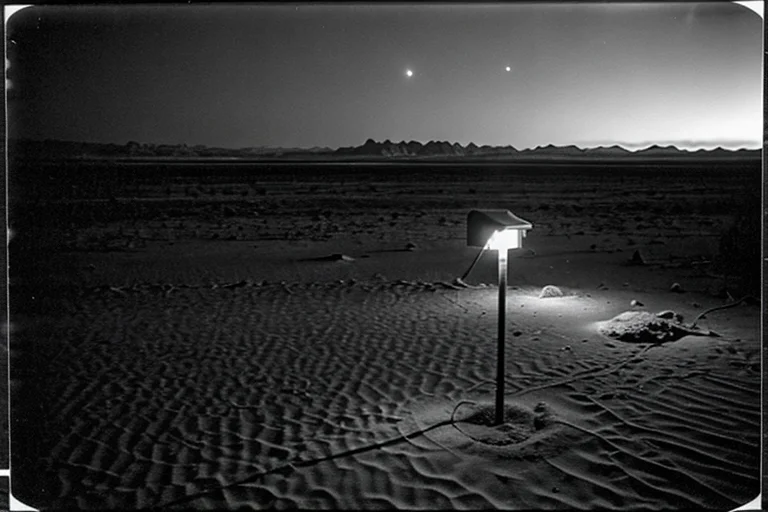
Shortly after noon on July 12, 2023, a Ruaha National Park ranger on patrol encountered an unusual phenomenon. From the trunk of a single baobab tree, approximately 20 meters tall, a dark, viscous liquid was continuously flowing and dripping onto the ground. The moment this liquid touched the soil, it rapidly hardened within seconds, forming crystalline masses. During crystallization, it emitted a faint, pale blue light, almost as if alive, and generated an unnatural heat in the immediate vicinity.
Similar reports had sporadically emerged from this region in the past. Local residents and safari guides spoke of legends, such as 'trees glowing at night' and 'animals avoiding certain spots,' but no concrete evidence had been obtained until now. Following this sighting, authorities immediately dispatched an investigation team. Initial analysis revealed that the exuded substance was a complex material, completely unidentifiable with any known organic or inorganic matter on Earth. The crystallized soil around the baobab showed increased hardness, and surrounding vegetation exhibited unusual patterns of wilting.
The investigation team installed high-sensitivity acoustic sensors and thermal cameras around the exudation site. Results indicated that during the phenomenon, infrasonic resonant tones below 20Hz, inaudible to humans but potentially affecting animals, were periodically generated. The source of these resonant tones remains unidentified, suggesting possibilities of the baobab tree's own vibrations, subsurface activity, or an unknown physical phenomenon. Animal behavior patterns also shifted, with typically waterhole-gathering herbivores conspicuously avoiding this particular area.
Extensive geological surveys and soil sample analyses are underway, but the precise conditions under which the phenomenon occurs remain elusive. The liquid exudation occurs irregularly, with no clear correlation to specific weather conditions or times of day. The collected sap samples showed no crystallization reaction in laboratory settings, suggesting that unique environmental factors at the site are essential. However, these specific factors have yet to be identified.
Surveillance camera footage from the site recorded microscopic light particles floating in the air around the tree just before the sap began to exude. These particles, too, cannot be explained by known physical phenomena. Authorities are withholding judgment on whether this phenomenon originates from a physiological anomaly of the baobab tree or from some external influence. However, its chemical composition and physical behavior clearly transcend known biological processes.
This incident has the potential for long-term ecological impact on the region. Urgent assessment is required, particularly regarding the effects of the infrasonic resonant tones and ground alteration on wildlife behavior, reproduction, and even human health. Authorities are developing further detailed investigation and long-term monitoring plans, attempting to unravel the nature of the exudate, its generation mechanism, and its ecological impact through a multi-faceted approach.
As of now, no scientific basis capable of fully explaining this peculiar phenomenon has been presented. This anomalous event in Ruaha National Park is registered on the authorities' list of unexplained cases, with continuous monitoring and data collection being the highest priority. The phenomenon continues to occur irregularly, and its future progression is under close observation.
Timeline
- July 12, 2023, 13:17Ruaha National Park ranger discovers anomalous sap exuding from a specific baobab tree. Report filed immediately.
- July 13, 2023, 08:00Initial investigative team from authorities arrives at the site. Sap samples collected, and surrounding environment observed.
- July 15, 2023, 10:30Faint luminescence and heat confirmed during sap crystallization on the ground. Infrasonic resonant tones recorded.
- July 20, 2023 onwardsExtensive geological and ecosystem surveys commence. Abnormal avoidance behavior in local animals and wilting of some vegetation observed.
- August 01, 2023Laboratory analysis of collected sap samples proves difficult. Shows composition different from known substances and exhibits unreproducible behavior.
Witness Testimony
Ranger A. NgoroThat baobab tree is strange. The sap glows faintly at night and feels warm to the touch. Even the animals avoid it. I've never seen anything like this.
Anonymous InvestigatorThe samples we took show no reaction in the lab. Yet, at the site, it glows and crystallizes. It cannot be explained without some catalyst or an influence from the specific environment.
Kyu's Analysis
This phenomenon defies known biological and chemical laws. It is highly probable that complex, localized environmental factors are involved. Detailed environmental analysis is critical.